Robinson Island Isn't Where You Left It
September 17, 2026
September 17, 2026
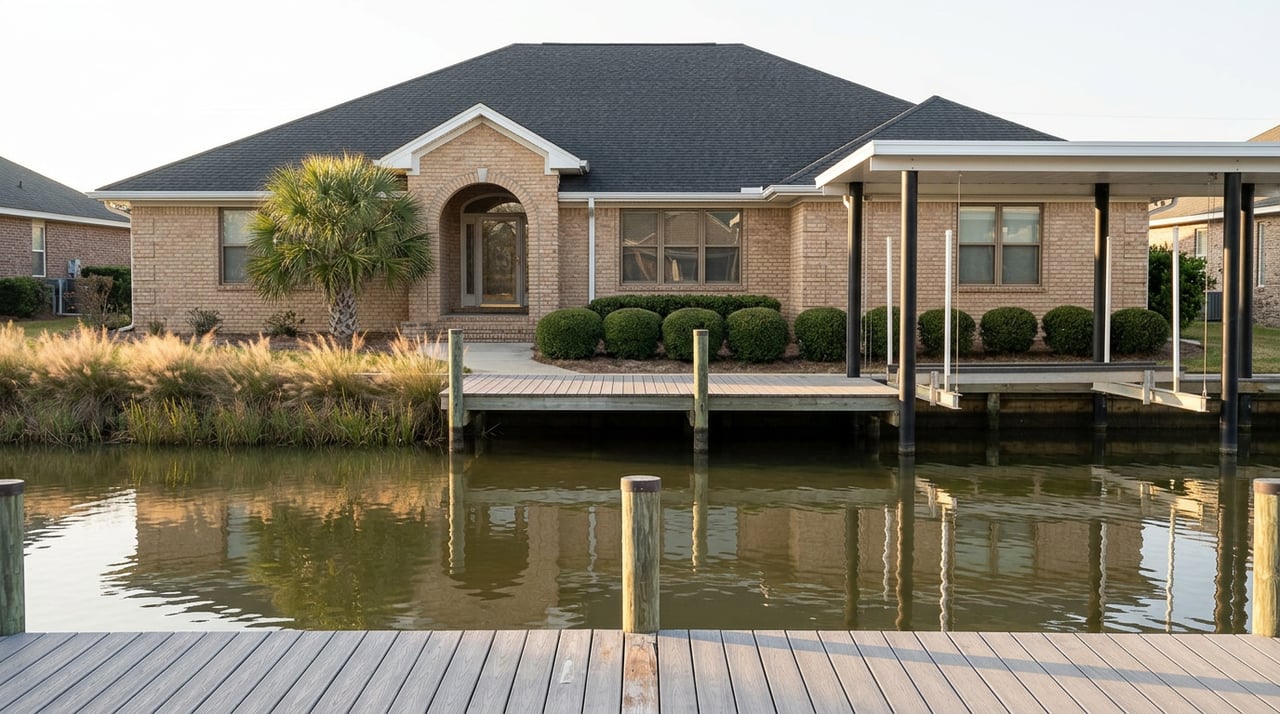
Head out through the guard gate, cross the bridge, and turn toward Perdido Pass on almost any Saturday morning and you'll see the same ritual that's defined Ono Island for decades: boats idling out of the canals, coolers loaded, everyone pointed toward the sandbar chain just past the pass. Robinson Island. Bird Island. The strip of shallow water between them where kids have waded for a generation. It's the reason so many homes here have a dock instead of a driveway.
But if you haven't beached a boat there since last summer, the sandbar you're picturing isn't quite the one you'll find. Robinson Island is bigger on its west end than it used to be. Walker Island isn't one island anymore. There are posted signs in places that used to be open sand, and for the first time this year, the rules attached to those signs are actually being enforced on the water, not just printed on a flyer.
What changed out there wasn't cosmetic. Between early 2025 and September 2025, a partnership led by The Nature Conservancy pumped roughly 216,000 cubic yards of sediment onto Robinson and Walker Islands, restoring about 27 acres of habitat across two contracts worth more than $21 million. The money came through the Deepwater Horizon Natural Resource Damage Assessment settlement and a NOAA habitat restoration grant, and the work was carried out with the City of Orange Beach, the engineering firm Moffatt & Nichol, and Orange Beach-based MD Thomas Construction.
The physical result is a different shoreline than the one long-time boaters have memorized. Walker Island, which used to be a single shrinking strip, is now split into Walker East and Walker West, with a combined 20 acres of new dune, marsh, and subtidal habitat. Robinson Island picked up roughly seven acres on its west end, including new dune and marsh, plus a reinforced rock revetment on the northeast corner to slow the erosion that had been eating that side of the island for years. Before the sand went in, the west end of Walker Island had disappeared underwater entirely, and Robinson's marsh was, in the project's own description, drowning.
None of that would have mattered much to a resident's Saturday plans back when the work was underway. Dredging pipelines crossed the water during construction, and boaters were asked to keep their distance from buoys and signage marking active work zones. That meant the summer of 2025 wasn't really a normal season out there. This one is.
Now that the islands are finished and the sediment has had a year to settle, the City of Orange Beach and the Alabama Law Enforcement Agency are enforcing No Wake and No Motor zones around Robinson and Walker for the first time on a fully restored footprint. The campaign behind it, called Don't Rock the Roost, is a joint effort between the city, The Nature Conservancy, and the Pensacola and Perdido Bays National Estuary Program, and it's aimed squarely at the more than 500 boats a day that show up around the islands during peak season.
What that means in practice depends on which island you're headed to:
Free printed maps showing the seagrass beds, no-wake zones, and closed areas are available through the city, and The Nature Conservancy has partnered with the navigation app Argo on an interactive version for anyone planning a run out there this fall. For a community that gets almost everywhere by water instead of by road, that map is worth having on the boat rather than assumed from memory.
One thing residents are already noticing without needing to read a sign: the water tucked behind the restored islands is calmer than it used to be. That's not incidental. The new island shapes are functioning as a windbreak, and Katherine Baltzer, the Nature Conservancy's coastal projects manager on the restoration, described the effect plainly in an interview this spring.
"We've created a sheltering effect, and with that sheltering effect, the seagrass can expand a little bit better."
That expanding seagrass is more than an ecological footnote. Calmer, shallower water behind the islands is exactly the kind of spot families anchor for an afternoon of wading and paddleboarding, and it's the same seagrass that supports the speckled trout and redfish a lot of Ono Island residents are out there fishing for in the first place. Baltzer has also confirmed that least tern nests and an osprey nesting on the ground have already turned up on the rebuilt islands, which is an early sign the project is doing what it was designed to do.
For the crews who spent 2025 building it, the payoff is personal rather than abstract. Daniel Lantrip, a project manager with MD Thomas Construction, put it this way after the work wrapped:
"This is right in our backyard."
He wasn't speaking loosely. The company is based in Orange Beach, and the islands his crews rebuilt sit a short boat ride from Ono Island's own private launch.
None of this turns a trip to Robinson Island into a hassle. It just means the trip looks a little different than it did a couple of years ago, and it's worth knowing before you go rather than finding out from a citation on the water. Bring the dog to Bird Island without a second thought. Beach the boat on Robinson's open sand the way you always have, and just give the marked dune and marsh sections a wide berth. Leave Walker alone, same as always, just admire that it's bigger.
The bigger picture is that this is the first season the restoration gets tested by the exact thing it was built to withstand: a normal summer's worth of boat traffic. Orange Beach officials have been clear that enforcement isn't meant to chase people off the water. It's meant to protect a $21 million investment that the same boaters who use it every weekend ultimately benefit from, whether that shows up as calmer water for the kids, a healthier fishery, or simply a sandbar that isn't visibly shrinking every hurricane season.
For a community built almost entirely around what's reachable by boat, that's not a small thing. It's the kind of change that shows up in conversation at the next steak night at the recreation center before it shows up anywhere else, and it's exactly the sort of detail that separates actually living on Ono Island from just owning a mailing address here.
If you're already part of that conversation, consider this your update. And if you're still picturing what life on Ono Island might look like, from the bridge in to the boat ride out, Pfabulous Real Estate spends as much time on that water as anyone else out there. Reach out any time you want to talk through what's actually changing on the island, whether it's a new sandbar rule or something closer to home.
Her innovative approach to assisting investors in analyzing vacation rental opportunities, as well as preparing her for post-sale maximization of rental income, makes her one of the most sought-after investor friendly real estate.