The One Gulf State Park Fee Village of Tannin Residents Never Have To Pay
September 10, 2026
September 10, 2026
Drive to the Gulf State Park Nature Center on a Saturday morning and you'll join a short line of cars waiting to pay the vehicle fee at the campground gate. It's not a large amount, and the fee covers campground upkeep, not park admission generally. But it's a fee tied specifically to bringing a car through that gate.
Walk or bike in on the Hugh S. Branyon Backcountry Trail instead, and there's no gate to stop at. The fee is per vehicle, not per person, and the trail doesn't run through a vehicle checkpoint. For a Village of Tannin resident, that's not a loophole. It's the whole point of living where the neighborhood's own trail segment ties directly into the Backcountry Trail system rather than requiring a car ride to reach it.
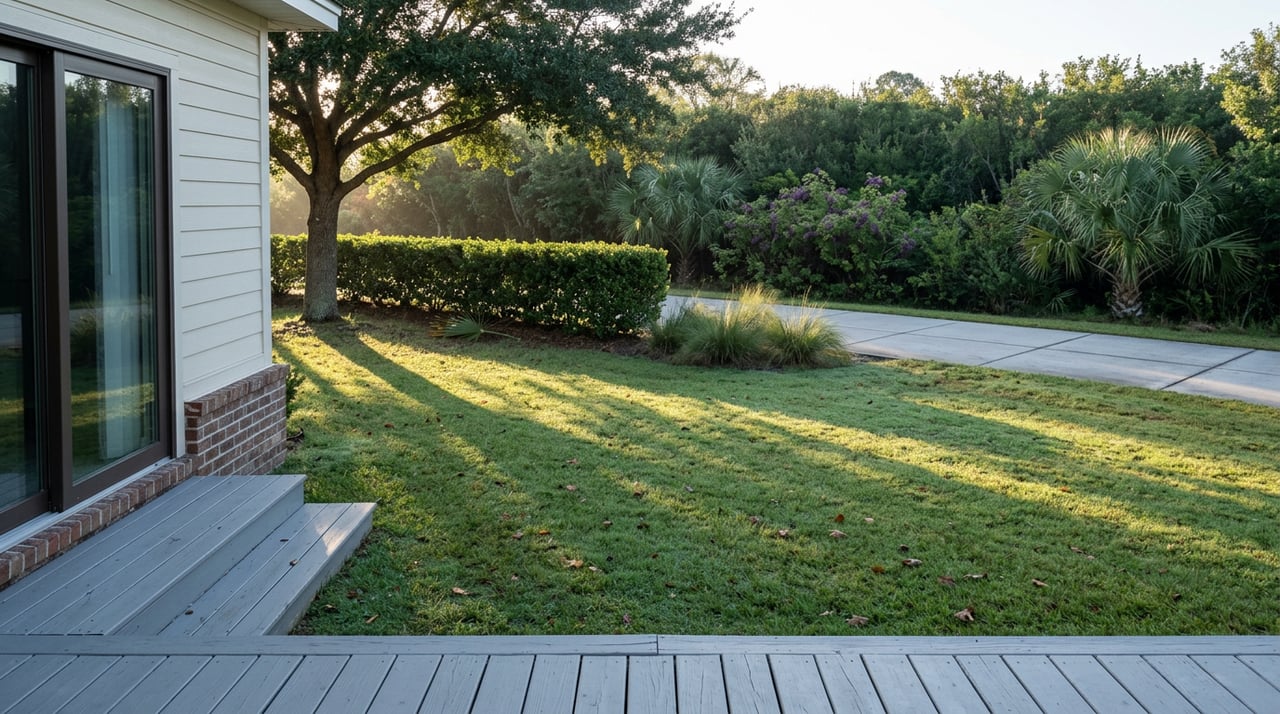
The Village of Tannin sits on the western edge of Orange Beach, close enough to Gulf Shores that some longtime listings describe it as barely across the line. What matters more than the exact boundary is what borders the neighborhood itself: the Hugh S. Branyon Backcountry Trail, a paved, multi-use path system that runs more than 28 miles through nine distinct ecosystems inside Gulf State Park, from dune scrub to freshwater marsh to maritime forest.
Most people who visit Gulf State Park experience it as a destination. They park at the Nature Center, at the Lodge, or at the campground, do their loop, and leave. Tannin residents experience it as a hallway. The trail doesn't require a trip. It requires stepping outside.
That distinction matters more in September than in July. The crowds that fill the beach access points during peak summer thin out considerably by early fall, while the trail's ecosystems and the Nature Center's programming keep running on the same weekly schedule year-round. A resident who treats the trail as a commute route rather than a vacation activity gets the quieter version of the park that visitors rarely see.
The campground entrance fee that pays for Gulf State Park's bathhouses, pads, and grounds upkeep is specifically a per-vehicle charge to enter by car. It does not apply to guests of the Lodge, the Eagle Cottages, or the Lakeside Cabins, and it does not apply to anyone arriving on foot or by bike through the trail network.
Here's what that split actually looks like for someone deciding how to get to a Friday nature program:
| Entry method | Fee applies? | What you skip |
|---|---|---|
| Drive to campground gate | Yes, per vehicle | Nothing, you pay to park near the Nature Center |
| Walk or bike in via Backcountry Trail | No | The gate line and the fee entirely |
| Stay overnight at Lodge, Cabins, or Cottages | No | Fee waived for registered guests |
The Nature Center itself is always free to enter, for everyone, regardless of how you arrive. What the vehicle fee buys is parking convenience at the campground. For a Tannin resident already standing at the trailhead, that convenience isn't worth paying for.
The Nature Center sits inside the campground at 22120 Campground Road and stays open Monday through Saturday, closed Sundays and on Thanksgiving, Christmas, and New Year's Day. Inside, live animal ambassadors, owls, turtles, snakes, and alligators among them, anchor a rotating set of educational exhibits built at a child's eye level.
The programming runs on a real weekly rhythm rather than a one-off calendar of special events:
That Friday slot is worth building a routine around if you're within walking distance, which Tannin residents are. It's free, it's staffed by park naturalists, and it runs regardless of whether you drove in or walked the trail to get there.
Past the Nature Center, the trail opens onto Lake Shelby, one of three freshwater lakes inside the park alongside Middle Lake and Little Lake. Fishing here requires a freshwater license, purchasable online, and the lake regularly produces bass, bream, catfish, and blue crab. The park's fishing pier, by contrast, is classified as saltwater water and draws redfish, pompano, sheepshead, and Spanish mackerel depending on the season.
Lake Shelby also sits inside the Alabama Coastal Birding Trail, a designation it shares with nearby Wade Ward Nature Park. As the weather cools into fall, the lake becomes one of the better local spots to watch for nesting bald eagles and osprey, birds that favor the quieter months over peak summer crowds. If you've walked the boardwalk section near the lake in July and seen nothing more than herons, it's worth another pass once September settles in.
There's also a fenced dog area at the Lake Shelby picnic grounds, with grass space and lake access on a leash. The park does note that alligators live in the lake, so it's the kind of detail you plan around rather than ignore, not a reason to avoid the area.
For residents who'd rather cover more trail than a walk allows without hauling a bike from home, Gulf State Park runs a free bike share system called Bloom. Stations sit at multiple points along the trail network. The entire process happens through a smartphone app, no membership card, no daily rental fee, just a scan at the station and a bike to return elsewhere on the network when you're done.
Paired with the trail's direct connection to Tannin, that means a resident can walk out the door, pick up a Bloom bike at the nearest station, ride to the Nature Center for the Friday snake program, continue on to Lake Shelby for an hour of birding, and drop the bike at any station along the way home. None of it requires a car, a parking spot, or the vehicle fee that everyone driving in that same morning is standing in line to pay.
It's easy to describe Village of Tannin as "close to the park" the way most listing copy does, and technically that's true of a dozen neighborhoods along this stretch of coast. What's specific to Tannin is the physical fact that its own trail segment ties into the Backcountry system rather than requiring a drive to a trailhead elsewhere. That single detail changes the math on the vehicle fee, the Friday program schedule, and the bike share stations from "nearby amenities" into "things you can reach without ever starting your car."
That's the kind of connectivity that shows up less in a listing sheet and more in how a resident actually spends a Saturday morning. It's also, quietly, one of the reasons owners in this pocket of Orange Beach tend to stay rather than trade up or move on once they've settled in. The park doesn't feel like a place you visit. It feels like the rest of the yard.
If you're weighing what a property near this kind of trail access is actually worth, or thinking about how a home here fits into a longer-term plan, Pfabulous Real Estate knows this stretch of Orange Beach block by block, not just by the listing sheet. Reach out when you're ready to talk specifics.
Her innovative approach to assisting investors in analyzing vacation rental opportunities, as well as preparing her for post-sale maximization of rental income, makes her one of the most sought-after investor friendly real estate.