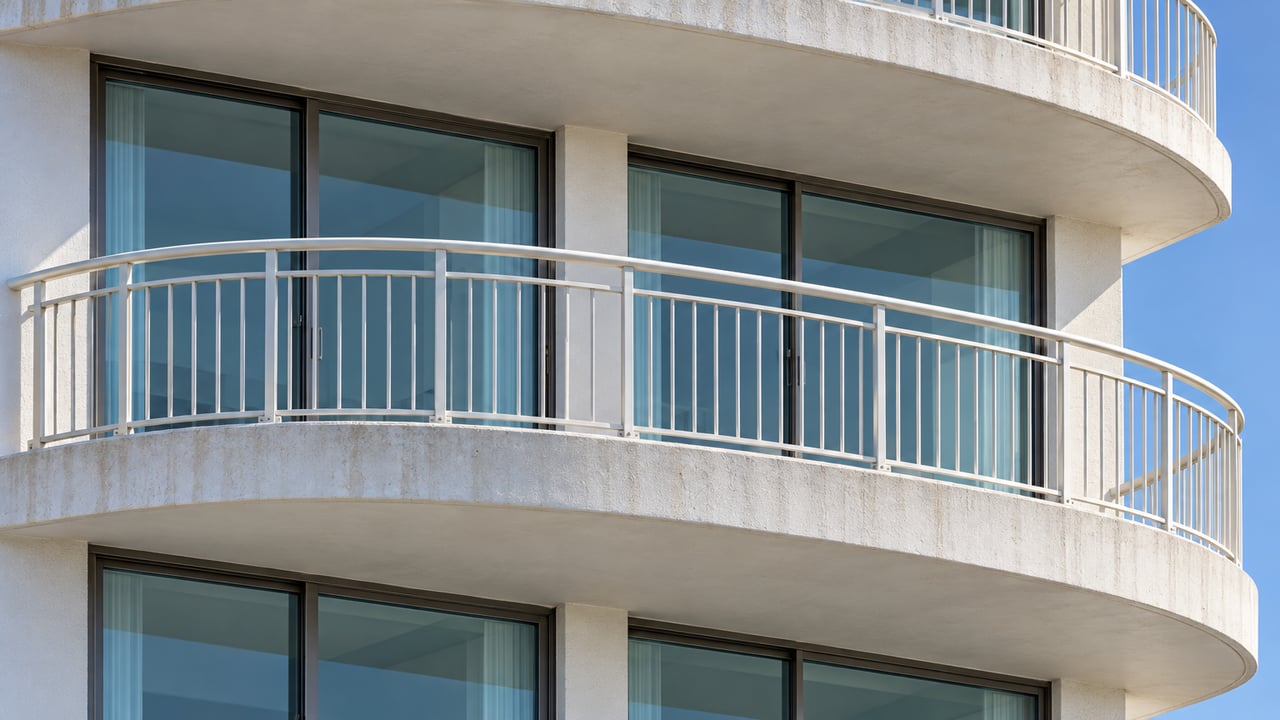
The Phoenix Name Covers Four Decades of Risk, and Lenders Have Started Treating That Seriously
October 1, 2026
October 1, 2026
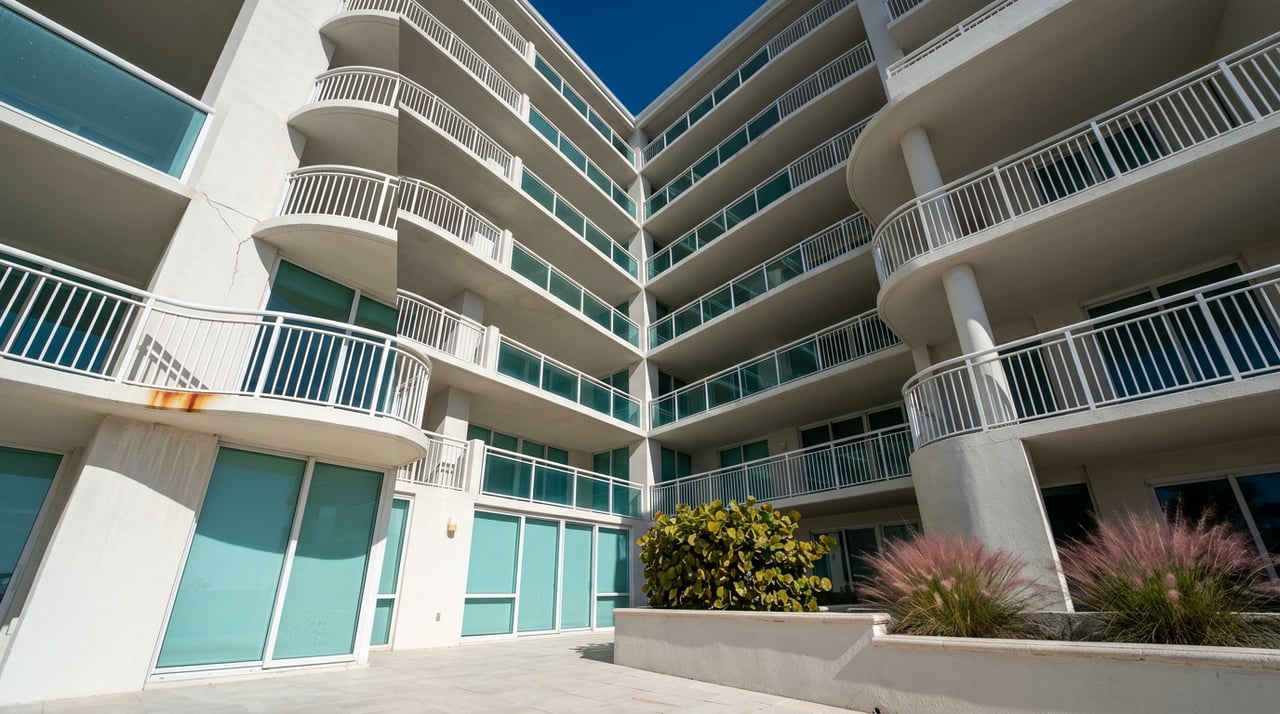
"Taller, newer condos with all the bells and whistles are doing okay. But those older stick-built places? It's much slower going for them." That's how one Gulf Shores broker described the split running through Baldwin County's condo market this year, and it lands hardest on buyers looking at Orange Beach's Phoenix towers, because Phoenix isn't one building. It's a brand name that Brett/Robinson has attached to more than twenty properties built across four decades, from a 1985 original to towers still under construction for 2026 and 2027.
That range used to be a marketing detail. In 2026 it's a financing detail, and the two don't always agree.
Phoenix I opened in 1985 and set the template that the brand has followed ever since: gulf-front, amenity-heavy, built for both owner use and rental income. What's changed is everything underneath the name. A buyer comparing two units marketed as "Phoenix" could be comparing a building that predates modern wind codes to one that hasn't finished pouring concrete.
| Tower | Built or Expected | Notes |
|---|---|---|
| Phoenix I | 1985 | Original Brett/Robinson Phoenix property |
| Phoenix on the Bay | 2004 | Bayfront, not gulf-front; boat slips and lazy river |
| Phoenix IX | 2007 | 104 units near Perdido Pass and Flora-Bama |
| Phoenix Orange Beach II | 2019 | One of the newer gulf-front towers pre-2023 |
| Phoenix Gulf Towers I/II | 2023 to 2024 | West tower complete, east tower opened 2024 |
| Phoenix Gulf Shores II | Summer 2025 | 110 units, gulf-front |
| Phoenix Key | Tentative Dec. 2026 | Low-density, 56 units, east Orange Beach |
| Phoenix South Point | 2027 | 66 units, next to CoastAL restaurant |
| Phoenix Perdido | Groundbreaking anticipated 2026 | The only planned Brett/Robinson tower in Perdido Key |
Phoenix Gulf Towers has been described in Brett/Robinson marketing as the 23rd condominium to join the Phoenix lineup. Whether that count is exact or approximate, the point holds either way: this is a brand family, not a single building risk profile.
Rental projections across Phoenix properties vary enormously. A one-bedroom in the older Phoenix VI, VII, or VIII cluster projects roughly $30,000 to $40,000 a year. A one-bedroom at Phoenix X, closer to Flora-Bama, projects $40,000 to $50,000 or more. Phoenix Key's larger penthouse units project $179,000 to $265,000 annually.
That spread looks like it's telling a story about age and desirability. It's mostly telling a story about square footage and bedroom count. What it isn't telling you is anything about which of these buildings can currently support a conventional mortgage, what your insurance will actually cost, or whether the building carries an unresolved assessment. Those answers live in a completely different set of documents, and they don't correlate cleanly with year built the way rental income does with unit size.
Florida responded to the 2021 Surfside collapse by mandating Structural Integrity Reserve Studies for condos three stories or taller, with hard funding requirements and a compliance deadline that hit at the start of this year. Alabama took a different path: it didn't legislate reserve studies at all. State law lets a Baldwin County condo association adopt a budget that includes reserves, but nothing requires the association to commission a study, and nothing sets a minimum funding level. Reserve planning here is a board decision, not a statutory one.
That's not automatically a problem. Plenty of Alabama associations fund reserves conservatively without being told to. But it means the paperwork trail that would tell you whether a 1985 or 2004 building has kept pace with its own aging infrastructure isn't standardized the way it is across the state line. You have to go find it, and the association isn't legally obligated to have produced it in the first place.
On March 18, 2026, Fannie Mae issued Lender Letter LL-2026-03, with Freddie Mac following with a matching bulletin. It's described by industry trackers as the most significant round of condo lending updates in several years, and the changes are still rolling out through the rest of 2026 and into early 2027.
The mechanics matter more than the headline. Fannie Mae and Freddie Mac don't just evaluate the borrower. They evaluate the entire condo project: whether at least 50 percent of units are owner-occupied, whether any single entity owns more than 10 percent of units, whether the master insurance policy covers full replacement cost, and whether delinquent dues stay under each agency's threshold. A project that clears all of that is "warrantable." One that doesn't is "non-warrantable," which typically means larger down payments, higher rates, and a narrower pool of willing lenders.
A survey the Community Associations Institute ran of over 700 board members and managers found 42 percent weren't sure whether their own community currently qualifies for federally backed financing, and 40 percent acknowledged their building has at least one characteristic that could trigger ineligibility. Among associations already deemed ineligible, 64 percent said it had already hurt home sales or property values.
None of that data is Phoenix-specific. But it explains why a buyer's lender might sail through approval on one Phoenix tower and hit a wall on another built fifteen years earlier, even though both units carry the same brand name and similar amenities.
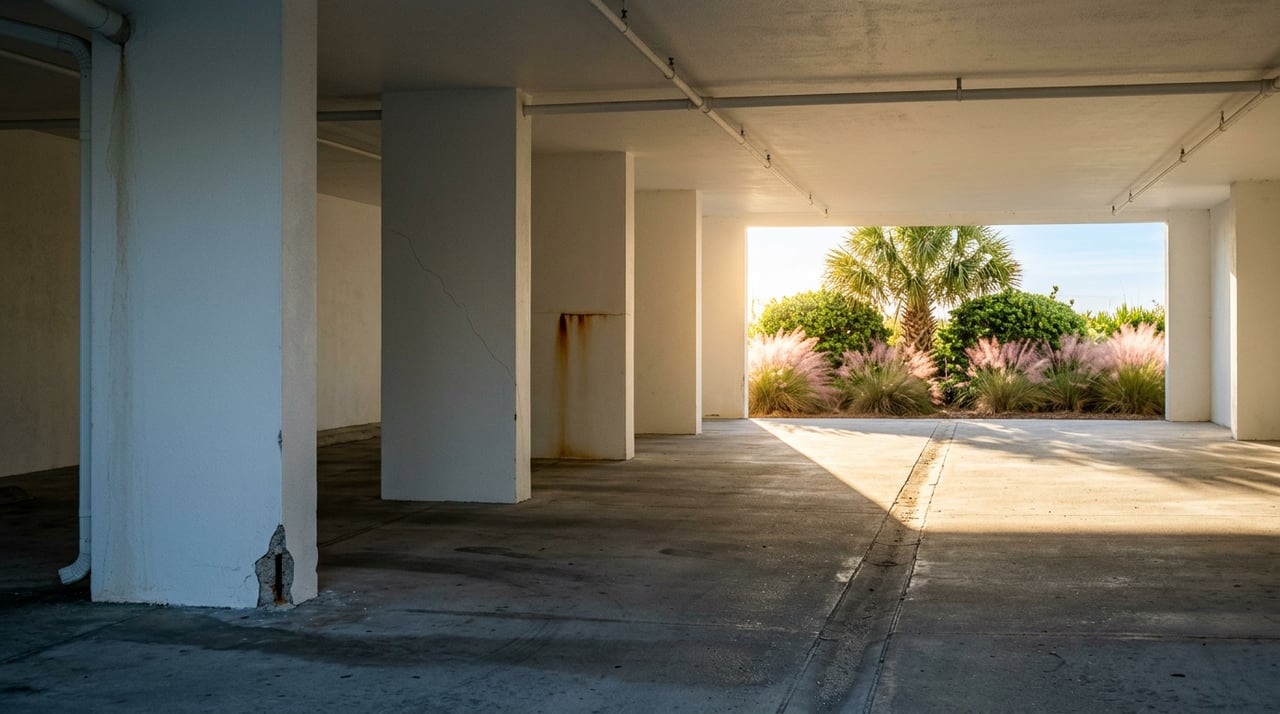
The other place vintage quietly shows up is in what the master policy actually covers. Older buildings on the Gulf Coast are more likely to carry a "bare walls in" master policy, meaning the association's coverage stops at the structure's shell and leaves interior fixtures, flooring, and built-ins to the unit owner's own HO-6 policy. Newer construction is more likely to be written "all-in," which shifts more of that cost onto the master policy and off the individual owner.
That distinction changes what your own coverage needs to look like, and it changes the price. Alabama HO-6 premiums for Gulf Coast units in Orange Beach and Gulf Shores currently run roughly $650 to $1,100 a year, compared with $350 to $450 for inland units, largely because of storm exposure. Post-Surfside, insurance guidance for older coastal buildings recommends carrying at least $50,000 in loss assessment coverage on your individual policy, since that's the mechanism that protects you if the association passes a special charge to cover a shortfall.
Alabama doesn't require the master policy to be disclosed automatically at closing. You have to ask for the declarations page yourself, and you need to know whether you're looking at bare walls or all-in before you can tell whether your HO-6 quote is actually adequate.
For any Phoenix unit you're seriously considering, regardless of which decade it was built:
None of this replaces a conversation with your lender early in the process, before you're attached to a specific unit. Financing eligibility can change what's actually negotiable on price.
Does a 2026-built Phoenix tower guarantee easier financing than an older one? Newer construction tends to clear owner-occupancy and insurance-adequacy tests more easily, but it's not automatic. A brand-new building can still trip other eligibility rules, and an older one can be well-managed and fully compliant. The building's actual documents settle it, not its completion year.
Can I check a project's Fannie Mae eligibility status myself? Your lender pulls this directly from Fannie Mae's Condo Project Manager or Freddie Mac's equivalent system during underwriting. It's worth asking early rather than after you've written an offer.
If a Phoenix building loses warrantable status, are buyers locked out entirely? Not entirely. Buyers can often still move forward through FHA, VA, or portfolio lending, though terms are typically less favorable than a standard conventional loan, and the project can reapply for approval once it resolves the disqualifying issue.
If you're comparing Phoenix towers, or any Orange Beach or Gulf Shores condo, and want someone who reads these documents before you fall for the view, Pfabulous Real Estate will walk the master policy and the reserve position with you before you write an offer.
Her innovative approach to assisting investors in analyzing vacation rental opportunities, as well as preparing her for post-sale maximization of rental income, makes her one of the most sought-after investor friendly real estate.