Caribe Resort Condo Document Review in Alabama
August 13, 2026
August 13, 2026
In 2025, a condo association on the Alabama Gulf Coast approved a little over $1.1 million to replace a roof that had simply reached the end of its useful life. No hurricane forced the vote. No lawsuit pushed the board's hand. An engineering report confirmed what salt air eventually confirms on every coastal high-rise: the membrane was done. What caught owners off guard wasn't the total. It was learning the bill wouldn't be split evenly. Alabama assessments are calculated by unit size and stack position, so two owners in the same building can write very different checks for the same roof.
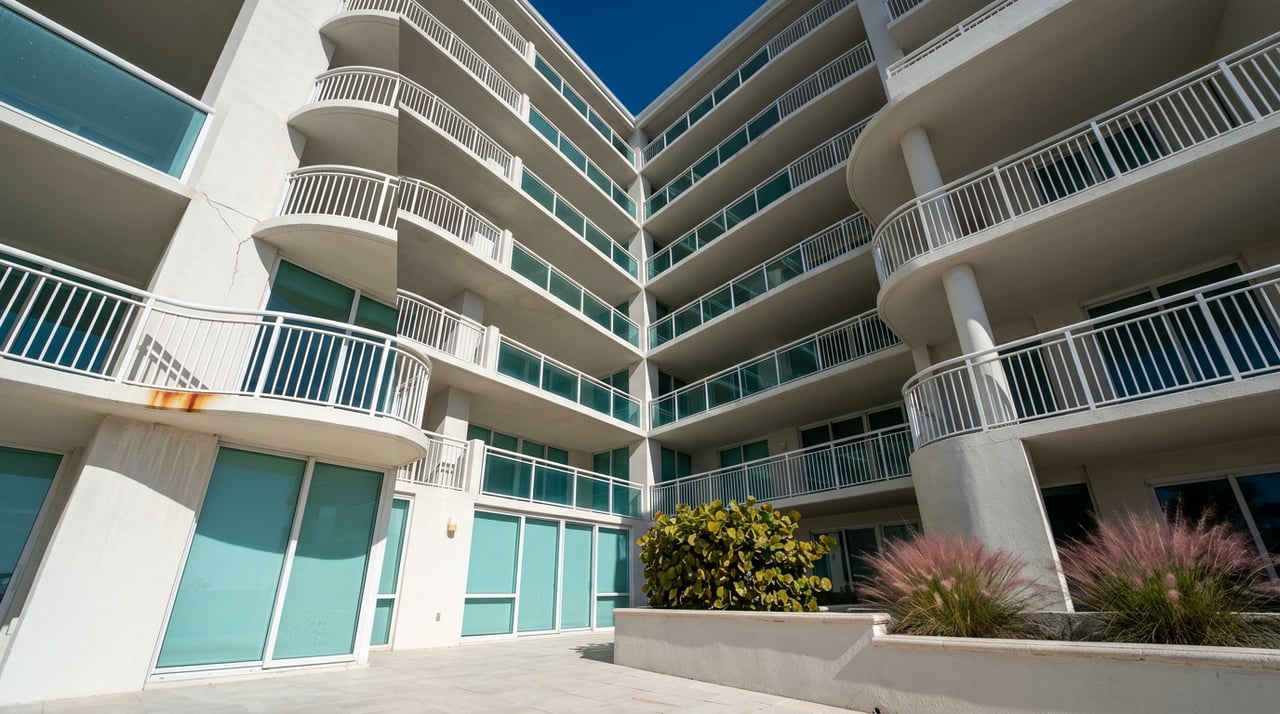
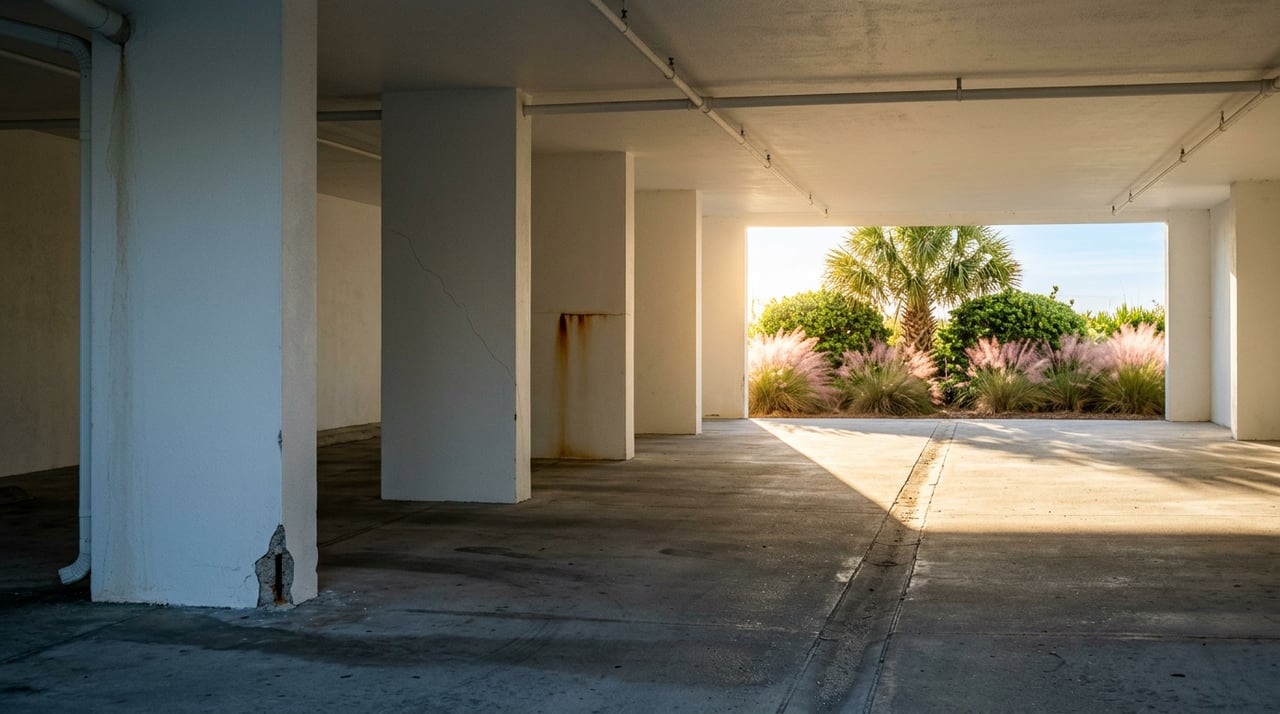
Caribe Resort's three towers opened in phases between 2002 and 2006, Tower B first, Tower D second, Tower C completing the roughly 600-unit resort on the peninsula east of the Perdido Pass Bridge. Wrapped by Old River on one side and open Gulf views on the other, it's exactly the kind of humid, salt-heavy setting that ages a building faster than an inland property of the same year. Every one of Caribe's roofs, elevator cabs, and window walls is now twenty to twenty-four years old, old enough that on comparable Gulf Coast towers, salt-air exposure has started accelerating concrete spalling, rebar rust, and envelope deterioration. That math isn't a warning about Caribe specifically. It's a warning about what Alabama's condo law does and doesn't require any association on this coast to plan for.
Florida spent the years after the 2021 Surfside collapse rewriting its condo statutes. Aging high-rises there now face milestone structural inspections and mandatory structural integrity reserve studies, with waivers restricted and funding levels tied to what the study finds.
Alabama did none of that. The Alabama Uniform Condominium Act lets an association adopt a budget that includes reserves, and that's the extent of it. There's no statute requiring a reserve study, no statute setting a minimum reserve balance, and no statute forcing a board to fund a single dollar toward the next roof.
| Florida | Alabama | |
|---|---|---|
| Reserve study required | Yes, mandatory structural integrity reserve studies | No statute requires one, ever |
| Minimum reserve funding | Tied to the study, waivers limited | No minimum, board discretion only |
| Master policy disclosure at closing | Standard part of the resale package | Not mandated, buyer must request it |
| Wind or named-storm coverage on common elements | Increasingly standardized | Not required, only 80% of actual cash value |
That last row matters more on a peninsula than it does forty miles inland. A review of Alabama condo-document risk patterns found that the state's condo statute requires common-element coverage to at least 80 percent of actual cash value, then stops there. Wind, flood, and named-storm coverage aren't part of the mandate. Whatever gap opens between the master policy and an actual storm loss becomes the association's problem first, and the owners' problem shortly after.
None of this means Caribe Resort is under-reserved. It means nobody outside the board has to tell you either way, and Alabama doesn't require the master policy to be handed over at closing. A buyer who wants to see the declarations page, the deductible, and whether the policy is bare-walls-in or all-in has to ask for it directly.
That distinction changes what a unit owner's own HO-6 policy needs to cover. On a bare-walls-in master policy, the owner insures everything from the studs in, which can push a unit's required HO-6 dwelling coverage from around $30,000 up toward $60,000 compared with an all-in policy that leaves the association covering more of the interior. A buyer who assumes their HO-6 needs match a friend's unit two floors down can find out at claim time that the master policy type, not the floor plan, sets that number.
Statewide, Alabama HO-6 premiums average around $480 a year as of 2026. On the coast, in Orange Beach and Gulf Shores specifically, that figure typically runs $650 to $1,100 a year because of hurricane exposure. Loss assessment coverage, the part of an HO-6 policy that reimburses an owner when the association bills a special assessment tied to a covered loss, defaults to as little as $1,000 in a standard policy. For a building in its twenties, $50,000 or more is now the common recommendation.
Alabama gives buyers one real lever, and it's a short one. A buyer can request the association's records within 14 days of signing the purchase contract, and the association then has 15 days to produce them. That's the entire disclosure window. Treat it as a formality and there's no automatic second chance before closing.
What to ask for inside that window:
Unpaid assessments aren't a soft cost. Under Alabama law they're the owner's personal obligation, and an unpaid balance can become a lien handled the same way a mortgage lien is handled. A seller who's behind on assessments doesn't automatically make that your problem, but a contract that stays silent on who pays what, and when, can.
Caribe Seaside, a new tower planned near the Best Western Tides Hotel and Cotton Bayou Public Beach Access from the same development team that built Caribe Resort and Turquoise Place, offers a useful contrast. First announced in 2024, the project held an invitation-only presale event in October 2025, with sales materials at the time pointing to a construction start sometime in 2026. Those same materials disclose an annual budget for the tower's Grand-line units that builds in a 10 percent reserve allocation from year one and requires two months of assessments as working capital at closing. Nobody made the developer do that. Alabama's statute didn't ask for it. The building is choosing to fund reserves the way Florida law would force it to, because sophisticated buyers now expect to see that discipline in the numbers before they'll sign a contract.
That's the real yardstick for anyone reviewing a resale budget at Caribe Resort, or any comparable Orange Beach tower built in the same era: not whether Alabama requires a reserve line, but whether the board chose to build one anyway. A budget with no visible reserve allocation on a 20-year-old building isn't automatically a red flag. It's a question that needs an answer before you sign, especially if you're financing rather than paying cash.
The stakes of skipping that question have started showing up in lending, not just in special assessment notices. The same mid-2026 review of Alabama coastal condo documents found roughly 70 Alabama coastal condo projects reportedly sitting on Fannie Mae's ineligible list, most often tied to inadequate insurance, deferred maintenance, or thin reserves. A project on that list generally can't support conventional low-down-payment financing, which narrows the buyer pool and can weigh on resale value along with it. That same review found Baldwin County condo sales down roughly 17 percent year over year as of mid-2026, sitting near half their 2021 peak, a correction that tracks more closely with tightening lending standards on older buildings than with any single storm season.
Does a healthy-looking HOA fee mean the reserves are fine? Not on its own. Dues fund day-to-day operations like pools, security, and landscaping. Reserve funding is a separate line item, and Alabama doesn't require it to appear at any particular level. Ask to see it broken out in the budget rather than assuming it's baked into the monthly number.
What if the seller is slow to produce documents inside the 14-day window? Put the request in writing the day the contract is signed and treat the 15-day response clock as a real deadline, not a suggestion. A seller or management company that can't produce a reserve balance or recent minutes on request is telling you something, even if nobody says it out loud.
Does buying pre-construction at Caribe Seaside sidestep this issue entirely? No, it shifts the question forward rather than removing it. Pre-construction budgets are projections. A 10 percent reserve line shows intent going in, but staffing, insurance, and utility costs on a brand-new tower often adjust after the first year of occupancy, so it's still worth asking how the actual budget performed against that projection once the building opens.
If you're weighing a resale unit at Caribe Resort, or comparing it against something newer on the same peninsula, this is exactly the paperwork we go through before an offer, not after one. Start Your Gulf Coast Search with Pfabulous Real Estate and we'll pull the HOA file with you before it becomes a surprise.
Her innovative approach to assisting investors in analyzing vacation rental opportunities, as well as preparing her for post-sale maximization of rental income, makes her one of the most sought-after investor friendly real estate.